
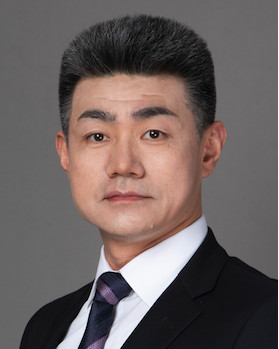
Hai-Wen Li
Sun Yat-sen University, China (Shenzhen Campus)
Dr. Hai-Wen Li is a tenured Full Professor at the School of Advanced Energy, Sun Yat-sen University (Shenzhen Campus), China. He has an extensive academic background, having served as a Postdoctoral Researcher, JSPS Postdoctoral Fellow, and Assistant Professor at the Institute for Materials Research, Tohoku University, Japan, from 2005 to 2011. From 2011 to 2020, he was an Associate Professor at the International Research Center for Hydrogen Energy and the International Institute for Carbon-Neutral Energy Research at Kyushu University, Japan. He later served as a Professor at the Hefei General Machinery Research Institute, China, from 2020 to 2024. Dr. Li's research focuses on the development of advanced materials and systems for hydrogen storage and rechargeable batteries. He has authored over 200 peer-reviewed publications and has been recognized with multiple awards, including the Fellow of the International Association of Advanced Materials, the JSPS Postdoctoral Fellowship, and JSPS Grant for Young Researchers (A). He also servers as an Expert of Hydrogen Storage Task at International Energy Agency, Committee Members of Hydrogen Energy at China Renewable Energy Society, China Hydrogen Energy and Fuel Cell Industry Alliance and China Energy Research Society.
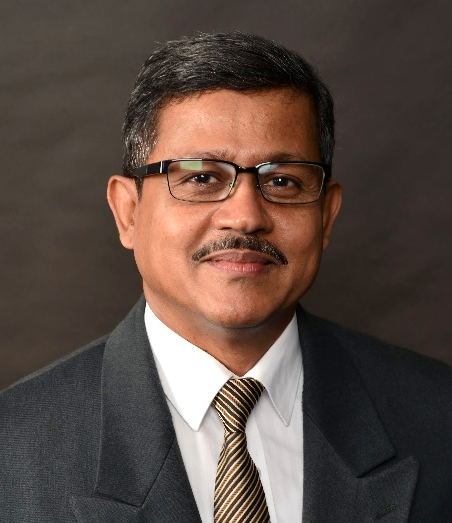
Md Raisul Islam
National University of Singapore, Singapore
Dr. Md Raisul Islam received his Ph.D. in Mechanical Engineering from the National University of Singapore (NUS) in 2003. Upon completion of his doctoral studies, he was appointed Technical Director at LJ Energy Pte Ltd, a Singapore-based energy services company. In this capacity, he led multidisciplinary engineering teams responsible for the design, implementation, energy auditing, and retrofitting of high-energy-demand systems, including chillers, boilers, compressed air networks, and Combined Heat and Power systems. These projects spanned diverse sectors such as industrial facilities, commercial buildings, healthcare institutions, hotels, and retail complexes. He holds a comprehensive suite of professional credentials, including Singapore Certified Energy Manager, Energy Efficiency Opportunities Assessor, Qualified Energy Services Specialist, and Leadership in Energy and Environmental Design Accredited Professional. He is currently serving as an Associate Professor in the Department of Mechanical Engineering at NUS, where he continues to pursue research and teaching in the areas of energy systems and thermal engineering. His scholarly contributions include more than 80 peer-reviewed journal articles, seven books, and two monographs, primarily focused on energy-efficient air-conditioning systems and thermal energy processes. Since 2020, his work has garnered over 1,600 citations and an H-index of 23, reflecting the sustained impact of his research in the field.
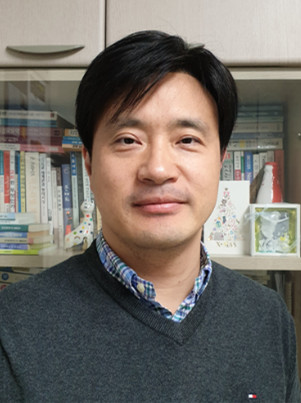
Dae Hoon Lee
University of Science and Technology, Korea
Dr. Dae Hoon Lee received his B.S, M.S and Doctoral degree in Aerospace Engineering, KAIST, 1997, 1999, 2003 respectively. And joined Dept. of Plasma Engineering, Korea Institute of Machinery and Materials in 2004 where he had served as a head of the department till 2024. And From 20205, He has been serving as a Director of Nitro future Initiative Global Top Research Lab. Which is a national flagship project for future R&D supported by NST (National Research Council of Science & Technology) and MSIT (Ministry of Science and ICT. He also serves as a Professor in Dept. Environment & Energy Mechanical Engineering of University of Science and Technology and Adjunct Professor of Korea University (Sejong) for 2024~2025. He is editorial board of Plasma Science and Technology, Steering board member of ISNTP(International Symposium on Non-thermal/Thermal Plasma for Pollution Control & Sustainability) and EAPETEA (East Asia Plasma-Electrostatic Technology for Environmental Applications) His research interest covers plasma driven thermal process including refinery process, reforming and combustion and electrification of diverse chemical processes. He is author of about 90 international journal papers and registered more than 270 domestic and foreign patents. Most of his works are dedicated in commercialization of the technology. He has been signed and contributed in 34 technology transfer contracts. He is now under collaboration with more than 20 domestic and foreign companies to provide solutions for energy and environmental issues. E-mail: dhlee@kimm.re.kr
Jinqiang Zhang
The University of Western Australia, Australia
Dr Jinqiang Zhang obtained his PhD in Perth from ECU’s School of Engineering on ‘Development of nanostructured photocatalysts for solar fuels production’ (2017-2021). After his PhD, Dr Zhang moved to Adelaide in 2022 to take up a post-doctoral position working on photothermal catalytic conversions of one-carbon compounds. In 2024 he was awarded an Australian Research Council Discover Early Career Research Award and in 2025 moved to UWA’s School of Molecular Sciences to take up a lectureship. At UWA his work will focus on developing nanostructured catalysts to convert sunlight into chemical fuels, such as clean hydrogen from water and high-value-added fuels from CO2.